Saturday, March 26, 2011

Turkey, Novel. The New Life by Orhan Pamuk


I don't know if I had ever read a book by an author who has won the Nobel prize for literature until now. Orhan Pamuk won the prize in 2006 and the Wikipedia snippet from his Nobel announcement made him a perfect fit for the Turkish lit portion of this project: “Orhan Pamuk who in his quest for the melancholic soul of his native city has discovered new symbols for the clash and interlacing of cultures.” 

The ‘clash and interlacing of cultures’.  That really sums up the Turkey I experienced during my visit there. Many times, it seemed to me that the place I was visiting with more European than many places I had visited in Europe. But if you know anything about Turkey you also know there is a lot about the place that is simply not European and there are a lot of people that like it that way and to want to preserve and enhance those differences. There is both on interlacing and a clash.

I was interested to see how this would play out in literature. In that respect, ‘A New Life’ does not disappoint. The book is the story of a young man whose life is transformed by a book. He is a normal, everyday college student until one day he happens upon an intriguing woman who just happens to have a copy of ‘the book’. On his way home after their encounter, he happens on another copy of ‘the book’ and on an impulse, he buys it.  After reading it, the book and the vision it presents become an obsession. He dropped everything to pursue it - abandoning the old life and all that went with it.

Is it too much to say ‘the New Life’ is a metaphor for Modernity and the west? The old life being Turkey’s religious and traditional path? You’d have to read it your self to decide, but it did not seem like such a stretch to me. And in Pamuk’s clash of civilizations, who is the victor?  I couldn't say. The end is a little obscure.  Probably a Nobel Prize requirement.

Wednesday, March 16, 2011

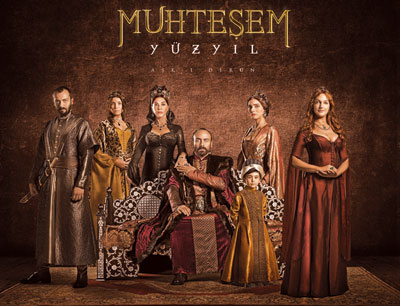
Turkey, Cinema: Eyvah, Eyvah and Magnificent Century


Turks are a proud people - and it is not like they do not have a lot to be proud of. Still, it has struck me that there is a measure of insecurity in expressions of that pride. It has been a crime in Turkey to disparage Atatürk. Why? Are the manifestations of his greatness not enough to win the day against his detractors. He needs the police to silence them. Turks see his greatness, but seem sure others will not. And so he needs protection.

I felt the same thing experiencing Magnificent Century. I say experiencing, because, well - what we did was so much more than simply watching the presentation. Magnificent Century chronicles the reign of Suleiman (a.k.a. Suleiman the Magnificent) ruler of the Ottoman Empire for much of the 16th century. It is a season-long television series running in 24 parts.  We were not able (yet) to see it in its entirety. The opening episode (90 min.) is available with subtitles on YouTube.  The second episode we watched with Murat and his family at their home. They kindly provided simultaneous translation. The remaining episodes have been appearing online, but without subtitles - so really we only know how the saga begins…

And we know how it was received in Turkey when it was broadcast. The closest thing I can compare it to was ‘Roots’. Magnificent Century created a huge stir.  There were daily stories in the press. It got to the point where even the Prime Minister (Erdogan) felt compelled to condemn it.

What was wrong? I think it became a surrogate for the ongoing struggle between conservative and secular elements in Turkish society. Another front in the fight about ‘how good was the past’ and how much of that past should we include in national life. Magnificent Century was criticized for showing one of Turkey’s greats in a not entirely flattering light.  In Turkey that sparks a fight.

‘Eyvah, Eyvah’ was in contrast just a piece of fluff.   I chose it because while we were in Turkey it's sequel 

‘Eyvah, Eyvah 2’ seem to be the number one comedy playing in almost every Cineplex we passed. The original is always better and since ‘Eyvah, Eyvah 2’  is still not available with subtitles, the choice was easy.

The film is the story of a country boy who goes to the big city (Istanbul) in search of his long-lost biological father. Hilarity ensues. He gets mixed up with a lounge singer (way out of his league) and then sucked into some underworld intrigue. The happy ending has him headed home to his village, his family and his true love. Can't wait for them to translate the sequel. It was a very enjoyable film. Like a brief trip back to one of our favorite places.  The people and ambience were very familiar and pleasant. Two hours well spent.

Monday, March 14, 2011

Cuba, Youth.

Life is tough in Cuba. Nobody has it easy.  But if anybody gets a bit of preference, it seems to be the kids. Rationing is one example. In Cuba, most of the family’s foodstuffs are acquired through the ration book system as un-rationed food is generally available only for CUC’s and hence is very expensive. How much milk does a person get? None. It's just for the kids (U7).


There are a lot of other little luxuries (sadly milk is a luxury) that are extended just to the kids. In my travels around Havana I came upon lots of opportunities for recreation intended for the younger children.  Pony rides, amusement park, playgrounds – not elaborate but available for pesos.  In the Cuban Art Museum, downstairs in the foyer they set up chairs, a stage and a sound system for a children’s show targeted at preschool and elementary school children. The show was pretty good. The performer was clearly a professional, her props were stage quality. It was the kind of thing you would expect to see on a local TV show, given for kids and their parents without cost.

Several times during the week I saw small groups of school age kids, in their uniforms, walking in groups clearly out on field trips. Some of these activities were doubtless part of the Pioneer program (based on the day and time I saw them - Saturday p.m. It wasn't likely a school outing)  Nearly all Cuban youth participate in the Pioneers, a trademark part of life in a Leninist country. Who better to raise your kids than the party?

A uniform at every grade
Though in their programs for youth the party's motives may be clear, it does not change the fact that youth and education are a priority. Compared to the United States, as a percentage of GDP, Cuba spends roughly 5 times what we spend.  In real terms, that may be less than we spend but it speaks to the value Cubans place on educating their youth.  

And they get results.  As I said before, Cuba’s medical program has become one of Cuba's few export products. It is a product of the education system.  Illiteracy, once a fact of life for many Cubans is now almost unheard of. There is great potential in Cuba's youth. It is ironic that the regime feeds that potential only to stifle it later, after they graduate. (see Cuba Commerce – coming soon)

Sunday, March 13, 2011

Cuba, Religion.

Looks a lot like Belgium...  
If you ask the Catholic church, 70% of Cubans are Catholic. If you ask the Communist Party, the appropriate policy of the government is the promotion of atheism, which is exactly what they have been doing since the revolution in 1959. So you have two important societal forces working at cross-purposes. Who's winning?


If the Communist Party is trying to eradicate religion in Cuba, by relative standards - compared to other Marxist-Leninist regimes - they are not trying very hard, and they are not succeeding all that much. It is true that the government of Cuba has an officially adopted policy of atheism. In the immediate wake of the Revolution they took steps to discourage religiosity.

And communist regimes have a lot of tools to discourage religiosity. In the Soviet Union you saw the closing and demolition of churches. In East Germany, the war took care of the demolition and churches simply were not rebuilt. That did not happen in Cuba. The old churches are still there, their interiors are still intact and the buildings continue to function as churches. That does not mean the party did not try to suppress them. Until 1991 you could not be a member of both the Communist Party and the Catholic church. That is an important choice. In a Leninist society the leading role (best opportunities) are reserved for party members. To choose the church was to forgo those opportunities.

So what changed in 1991? Well actually it was a bit before that. The collapse of the Soviet Union led to the loss of billions of dollars in economic support for Cuba. Hard times were on their way. From an economic standpoint Cubans would have to live with less. One of the government’s responses was to relax the constraints on religion -improving at least one aspect of life. In 1998, Pope John Paul II visited the island. For the first time, Christmas became an official holiday. The Castro's discovered ‘Liberation Theology’ was not that far removed from their own ideology. Cuba began to adopt a much more tolerant position.

In my neighborhood
I don't think you can say it has translated into a resurgence of Catholicism. The church I visited was in my neighborhood, which after five days of exploring I knew to be well integrated by both age and race. The church was notably not. It was considerably older and whiter than its surroundings. On this Sunday it was somewhat lightly attended (about half full). Not unusual for the churches I have seen elsewhere on my travels but not a sign of great health.

The other church buildings I visited were all more of the ‘tourist-visit’ variety.  They appeared well-maintained but reliant upon tourist CUC's (which they pursued relatively aggressively - verbal request for donation on exiting). Everyday churches I passed seem to be active, but closed except for services. This makes sense. Funding for the churches is restricted to the acceptance of donations from ‘approved sources’. No doubt this gives the regime the ability to control the church and its footprint in the community. No money - no staff, no staff - no services, small footprint - less competition with the party and its message.

I did see one interesting manifestation of this. As I entered the church on Sunday morning there was a line to stop at a table. I skipped it and sat down. As I sat, I watched. Not everyone stopped at the table. Those who did either put their name on a list (no idea what for) or made a donation to get a bulletin. No one got a bulletin without a donation, though it may just have been a token payment. Since I wanted a bulletin, I went back and got one. It was an interesting document. It had the order of service, of course, and some announcements - but what was interesting was that it was a national publication printed on the cheapest possible paper given only by extraordinary donation on request. Testament to a church with very limited resources.

Wednesday, March 9, 2011

Who is That? #17

This is the last one for a while.  I need to get to China and find some new material.  Rather than dig deep into the files, until then Wit? will take a break.  Next picture 3/30.  For this one  Send your guesses here.

St. Paul & his Basilica
Last week's answer: St. Paul.

First correct answer - this time, MZ.

Scoring:  First Day - 10 pts.  First Correct - Bonus 5.  After Clues: 5 pts.  No Guess: 0 pts...
The standings after 9 rounds:


SP: 80
AM:65
MZ: 50
CM: 35
NH:10
KM:10
You: 0

Havana, Second Site: ‘Old Havana’


Let's be frank, in comparison to the other cities included in this project (Moscow, Berlin, Istanbul) Havana is just not in the same league. Cuba is a small country and Havana has not been at the center of world history. A Top 10 list of things to do in Havana consists mostly of smoking, drinking and cruising. There are not a lot of must see sights. Unless you count an entire neighborhood as a site.

Then, Old Havana makes everyone's list and even if there is no one particular spot, or one particular event that stands out, as a whole that part of town represents the best of Cuba. At least the best of what it was and perhaps the best of what it could be. I am not so sure about the present.

Havana does have a past. Already at beginning of the 17th century Havana was an important part of Spain's American empire. Counting on the strength in numbers as a way to protect their ships from piracy, Spain would bring its ships to Havana from throughout the New World and then from there they would sail together for Spain. A lot of wealth was passing through town and a lot of people hanging out. Havana prospered.

Prosperity left its mark. Old Havana boasts grand old public buildings as well as the homes and haunts of the wealthy. The oldest part of the city (between the cathedral and Plaza San Francisco) has the feel of colonial Spain and presents one architectural gem after another as you stroll along the quiet streets that though not a pedestrian zone, see so little traffic that they might as well be.

Moving inland from the colonial quarter, you see the product of the 19th and 20th centuries.  Still a time of relative prosperity - at least for those at the top of the economic pyramid. They build their baubles to show off and to play in.  The Capitolio and the Gran Teatro are excellent examples of a society and a class confident in its wealth, power and future.

Three Buildings: Decaying, Restored, In Process
Only things did not work out the way they expected. With the revolution, most of Cuba's wealth and wealthy citizens fled the country. The opulent buildings and the activities they housed were no longer needed and fell into disuse. Many have not aged gracefully. Today, as tourists begin to make Havana a regular part of the Caribbean vacation scene, some of these places are recapturing their grandeur. You can wonder if it is a good thing. They are being fixed up - but not for Cubans. That part felt wrong and bothered me. Is the day coming when they can enjoy it, too?

Tuesday, March 8, 2011

Cuba: Government Center

Have you ever been on a snipe hunt? If you were a Boy Scout you may have experienced that adventure. It is a favorite activity for a young scout’s first camp-out. If not, you may have missed the fun. Let me describe it. 

A snipe hunt is, of course, the hunt for a snipe. A snipe, if you didn't know, is always described as a small, nocturnal, flightless bird. They are said to favor meadows and are kind of skittish. To find one you have to flush them out. The best way to do this is to line up at the edge of the meadow, shoulder to shoulder and proceed across, gesticulating and making loud whooping noises until you flush a snipe out of its lair. It doesn't always work the first time. Sometimes you have to come back the next night and try again. And again.

Finding the Cuban parliament felt to me a little like going on a snipe hunt.*  You try and try. You look and look, and at the end of the day you may not find anything. Finding a building that looks like a parliament in Havana is a piece of cake, especially for Americans. Right downtown, dominating the main square, you will find El Capitolio, a building that bears a striking resemblance to the US Capitol Building in Washington, DC. Built in the 1920s, El Capitolio housed the Cuban legislature (such as it was) until the revolution in 1959.

And after the revolution? They still have a legislature, don't they? Sure they do. It is called the National Assembly of People's Power. Well, the Assembly needs a building, don't they? Not so much. Cuba's constitution designates the Communist Party as “the leading force of society and state.” The Assembly only meets twice a year and when not in session, it delegates its legislative powers to the Council of Ministers (Assembly members must trust them a lot!) Two meetings a year. Seems like a waste of a big building. So after the revolution El Capitolio is repurposed to house the Academy of Sciences.

The Central Committee
And where does the legislature meet? I have no idea. Not only did I never find it (while in Havana my resources were limited to a guidebook and information offices - as you know, I had no chance to Google it.) I still can't find any mention of it's meeting place, even with the Internet.

I did find the locus of power in Cuban politics, however.  The real decision-making takes place at the Central Committee of the Communist Party. Their building is located in the military zone, behind the Marti Memorial near the Plaza de la Revolucion. From the memorial  you can see it, but you can't get anywhere near it. There is a checkpoint on all roads leading in to it and a cordon of sentries spaced 50 feet apart between the roads. I could see it, but I could not get near it.

Cienfeugos
I had a similar experience with the provincial capital building in Cienfuegos. It was there on the Central Square, a beautiful old building with its doors wide open. I thought I had a chance. Nope. Just inside the doors was a minder. As I walked past her (my usual MO -don't ask, just give it a shot.) she sprang into action. “You can't go in there!”  I don't know who can - my Spanish is not good enough for that. I just know I cannot.


*Okay, for those of you who don't know the inside joke - there is no such thing as a snipe.

Wit? Clue: The book and the sword are apparently a giveaway.  Though JP II could see St. Peter's Square, I don't think there is a statue of Peter there.  This one is not that close to the Vatican, but still not that far...