Showing posts with label Cinema. Show all posts

Saturday, June 18, 2011

China, Cinema: ‘Shaolin’ and ‘Balzac and the Little Chinese Seamstress’


So, did I see a Chinese film? I'm not quite sure. I suppose ‘country of origin’ all depends on your definition. It may be true of any film these days. Films are expensive to make and a producer seeks the widest possible audience. International collaboration blurs borders and smooths access to the global market. It also dilutes the national origin of a lot of movies I considered for this project, not just for China  but for any country with a smallish media market. You must doubt whether what you've seen presents an authentic national vision.

With China it may be particularly true. There are Chinese language film centers in Hong Kong, Taiwan and Singapore and then, of course, in China itself. A filmmaker can blend markets and talents producing something whose origin is far from clear. I had lots of choices but little idea what to choose.

I ended up with a romantic biography ‘Balzac and the Little Chinese Seamstress’ and a kung fu movie, ‘Shaolin’.

‘Shaolin’ was an easy choice. After a month in China we had seen lots and lots of kung fu movies - even if we could not understand them. Many of the hotels we stayed at only had one channel of English language TV - CCTV. Lots of state media news coverage on that channel. After a while you have had enough and even a Chinese language movie is better. We watched quite a few and picked up on some themes. Oppressers (warlords, Japanese, European imperialists) exploit hard-pressed Chinese common folk who eventually rise up, lead by an unassuming guy who just gets fed up and unleashes his kick-ass martial arts moves. China wins.

I chose ‘Shaolin’ because I wanted to see one I could understand. Turns out even without the subtitles I was not missing much. ‘Shaolin’ was pretty much true to form. Competing warlords battle until one loses all that matters (his family) and turns to the Shaolin monks for solace and refuge. His rival teams with the imperialists to enslave the peasants in the service of western greed. Finally, our hero reaches the limit, organizes the monks and villagers and strikes back.

I was reminded of the cowboy westerns of my youth. The same movie made over and over reinforcing themes that strike a chord with people’s self image. The good guys win. In the end everything will turn out right.

‘Balzac and the Little Chinese Seamstress’ was completely different. Netflix had it listed as a romantic comedy and though it was a romance, I must have missed the comedy. As an example of Chinese romantic comedy, I'm only sure of one of those three.

It was the work of an author-director born and raised in China. Like Jung Chang (see Wild Swans post) he lived the Cultural Revolution, then won a scholarship abroad (France) and never went home. The film is the largely autobiographical account of his time of ‘reeducation’ in the countryside. As such, it is an interesting portrait of those times and the people of that place. For many Chinese I met, that era is the central event of their lives. The upheaval, experienced directly, or by immediate members of their family, changed everything. Like the protagonist in ‘Balzac’ they struggle to make sense of it. Despite the hardship, it is what got them to where they are today. It does not seem like they perceive it as all bad.

The long view seems to be a very common perspective. ‘Balzac’ captures it. China seems to be living it.

Saturday, April 23, 2011

Cuba, Films: Barrio Cuba and Viva Cuba

The idea behind adding cinema to the project was to broaden the access to culture through exposure to multiple forms of its expression. When I made that decision, which then became a commitment by being enshrined in my sabbatical contract, I had no idea how difficult it would be to realize in practice.

Foreign films may seem like they are readily available - until you go looking for a specific film. Then, it is much harder to find exactly the one you are looking for. You are reduced to the small subset of films “someone” has decided the world should see. They are not always the films I wanted to see. That was the case with Cuba. You go to Google and there are lots of choices. But you can't find them and you are reduced to what Netflix offers. With Cuba, that is not much.

I watched Barrio Cuba and Viva Cuba. My guess is you have to put Cuba into the title to help with the marketing. Either of the films could have had different titles. Nonetheless both had some interesting things to say about life in Cuba.

Viva Cuba was more light-hearted. It was the story of a girl who's divorced mother was preparing to leave Cuba and take her daughter, Malu, with her. Malu is desperate to stay in Cuba and so she runs away with the help of her chum, Jorgito. They set off in search of her long-lost father, hoping he can prevent her departure.

Viva Cuba dealt honestly with issues of race and class separating Cubans. It did not sugarcoat the economic deprivation Cubans experience which makes them think of leaving. In general it was upbeat and had a ‘happy-ending’ facilitated by a character that seemed (to me) a lot like Ché (complete with motorcycle).


Except for the happy-ending Barrio Cuba was relentlessly downbeat.  It is the story of three families struggling to make it in Havana. And it is a struggle. Meager food supplies, substandard housing, alcoholism and hustling all feature prominently in a story where things just slide from difficult to worse. It is not the kind of film you would expect from a Leninist society’s film program. The panacea of exile features prominently and is presented as just that, a panacea.

Both films provide a sense of how Cubans see their lives - one that seemed a reasonable conclusion given what I saw while there. The only surprise to me was that distribution of this vision receives the tacit approval of the regime. Mild, indirect criticism as a relief valve?

Wednesday, March 16, 2011

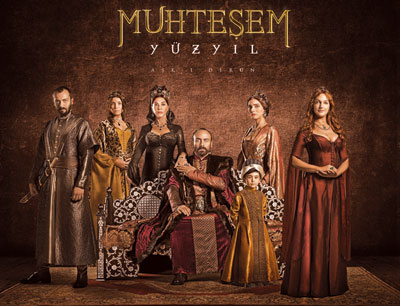
Turkey, Cinema: Eyvah, Eyvah and Magnificent Century


Turks are a proud people - and it is not like they do not have a lot to be proud of. Still, it has struck me that there is a measure of insecurity in expressions of that pride. It has been a crime in Turkey to disparage Atatürk. Why? Are the manifestations of his greatness not enough to win the day against his detractors. He needs the police to silence them. Turks see his greatness, but seem sure others will not. And so he needs protection.

I felt the same thing experiencing Magnificent Century. I say experiencing, because, well - what we did was so much more than simply watching the presentation. Magnificent Century chronicles the reign of Suleiman (a.k.a. Suleiman the Magnificent) ruler of the Ottoman Empire for much of the 16th century. It is a season-long television series running in 24 parts.  We were not able (yet) to see it in its entirety. The opening episode (90 min.) is available with subtitles on YouTube.  The second episode we watched with Murat and his family at their home. They kindly provided simultaneous translation. The remaining episodes have been appearing online, but without subtitles - so really we only know how the saga begins…

And we know how it was received in Turkey when it was broadcast. The closest thing I can compare it to was ‘Roots’. Magnificent Century created a huge stir.  There were daily stories in the press. It got to the point where even the Prime Minister (Erdogan) felt compelled to condemn it.

What was wrong? I think it became a surrogate for the ongoing struggle between conservative and secular elements in Turkish society. Another front in the fight about ‘how good was the past’ and how much of that past should we include in national life. Magnificent Century was criticized for showing one of Turkey’s greats in a not entirely flattering light.  In Turkey that sparks a fight.

‘Eyvah, Eyvah’ was in contrast just a piece of fluff.   I chose it because while we were in Turkey it's sequel 

‘Eyvah, Eyvah 2’ seem to be the number one comedy playing in almost every Cineplex we passed. The original is always better and since ‘Eyvah, Eyvah 2’  is still not available with subtitles, the choice was easy.

The film is the story of a country boy who goes to the big city (Istanbul) in search of his long-lost biological father. Hilarity ensues. He gets mixed up with a lounge singer (way out of his league) and then sucked into some underworld intrigue. The happy ending has him headed home to his village, his family and his true love. Can't wait for them to translate the sequel. It was a very enjoyable film. Like a brief trip back to one of our favorite places.  The people and ambience were very familiar and pleasant. Two hours well spent.

Wednesday, January 26, 2011

Germany: Cinema The White Ribbon & (T)Raumschiff Surprise


‘The White Ribbon’ won its share of awards, and I suppose, as a film, it was interesting enough. Like many European films I have seen, however, I got to the end and still was puzzled - what was it all about?

There's a reason the ‘Hollywood Ending’ is called a Hollywood ending. It seems American audiences demand that their movies have an end - preferably a happy end. I have read that studios will sometimes assemble focus groups and show them their films with different endings, to test out which one will be the most successful – pointing, of course, towards commercial success.  I don't think Europeans do that. Often the film ends and the audience is left to puzzle - okay what was that all about? ‘The White Ribbon’ fits comfortably into this model.

It is set in a German village on the eve of World War I. I was looking forward to seeing what today's Germans make of that era. From what I have read about prewar Germany, in history and fiction, I get the sense that today's Germans may as well be from a different planet. That part did come through.  The old Germany was portrayed as cold, cruel and repressive - quite distant from today's ambience. Consistent with what you might expect from people who hate their past.

‘(T)raumshiff Surprise’ was something completely different.  Yes, about as wacky as what you might expect from Monty Python. It was a spoof of Star Trek, born on television and expanded for the big screen. If you can imagine a German ‘Spaceballs’, you pretty much have this film. What was interesting was the choices of what to spoof.  The lead characters are gay and for some reason they end up in the Wild West. Germans have a fascination with that time and place. I guess it all makes sense…

Wednesday, October 20, 2010

Russia; Cinema

‘12’ is a Russian film from 2007 directed by Nikita Mikhailkov. It is a remake of the American film, ‘Twelve Angry Men’.


The story is that of a group of Russian men, drawn from all walks of life and brought together to decide the fate of a young Chechen man accused of murdering his adoptive father a Russian officer and veteran of that conflict.


It begins with the consensus of guilt, disrupted by a lone juror and proceeds through their deliberations as they reflect on the
case and how it
relates to their experiences.  One by one they turn until they deliver unanimous ‘not guilty’ verdict.


The film offers interesting insight into what is presented as the lives of average Russians of different strata of society. Their experiences, prejudices and their values are presented as they struggle with the decision about the young man's fate.


Comedy: Irony of Fate. It seems Russian cinema is not all that different from Hollywood. Of the films I saw, both of them were remakes. It seems nobody has fresh ideas. The first was, of course, ‘12’ a Russian remake of the American ‘12 Angry Men’. The comedy, Irony of Fate, was a post communist remake of the 1975 film of the same title. I chose it because it was at the time the highest grossing Russian film ever. A sign that it has some resonance with Russian audiences.

The 2007 remake is actually sort of a sequel that uses a clever plot device to retell the same story - only the protagonists are the children of the original characters. In a stroke of marketing genius those original actors return to play their characters, now the parents of the protagonists, some 30 years later.

It was interesting to compare the two films. The plot is two men vying for the affections of a woman. In 1975 the loser was nondescript. In 2007 he is an overly connected money-first businessman. The sensitive doctor/poet wins both times. An interesting note about 2007 the level of drunkenness goes through the roof. Most of the supporting characters are drunk. What does that say?