Showing posts with label Explore. Show all posts

Thursday, May 19, 2011

China, Exploring Shanghai

The Shanghai portion of our trip was unlike any of the other legs of our journey - and I don't mean our journey in China, I mean from the first day in St. Petersburg. Shanghai was unique. In Shanghai we were blessed to be accompanied pretty much every step of the way. You already know about our wonderful Shanghai friend, Prof. Ma and his wife, Vivienne, but in Shanghai we also had our California friends Sandy and Pete.

At the outset of our journey we issued what we thought was a standing invitation to all of you to join us, anytime, for any part of our adventure. Sandy and Pete were the only ones we could convince to take us up on the offer.  It made a big difference to how we experienced the city. First, Pete knows Shanghai well. He is a pilot who flies Asia routes and finds himself in Shanghai a couple dozen times a year. 

Pete's been doing this for years and as a result has made a bunch of friends in Shanghai. He shared them with us. He gave us the opportunity to see another side of Shanghai - the side of everyday life. A side that could otherwise easily be missed as your head is turned by Shanghai's glitzier side.
The glitzy side is surely the one that makes the biggest impression. Downtown Shanghai, especially the riverside area known as the Bund, is something like New York meets Vegas. Shanghai is China's largest city by population by a pretty wide margin. 
Electronic traffic updates on freeway signs -
Maybe they are ahead of us in applying technology?
It is also China's economic engine, which means that it is going to have the mega skyscrapers you would find in New York. But there are a couple of differences. New York, being an Island, is a confined space. Shanghai is a bit more like LA in that respect. It can spread out in all directions and it does. Tall buildings, displaying extraordinary architectural panache, appear at all points of the compass. Shanghai's skyline is impressive in the day time - then the lights come on and it is like nothing I have ever seen. To me it is a great expression of China's vibrancy and confidence.

Friday, May 13, 2011

China, Exploring Beijing


People we met told us to be prepared for it. “Beijing is dull”, they said. Of course they were comparing Beijing to Shanghai and if that is your frame of reference, then yes next to Shanghai, Beijing is dull. It is a government town and government buildings tend to be utilitarian, no matter what the political system.

Beijing also seems to suffer from the same circumstances that make LA so nondescript when compared to San Francisco. 

The city is built on large, flat expanse without geographical features to constrain its spread. And so, over time has spread and continued to spread. There are not really high-rise buildings to speak of, certainly not a cluster of them to create the striking skylines we saw in Hong Kong and Shanghai. Beijing is big, flat and sprawling. It is kind of dull.

That is not to say that it's neighborhoods do not have character. Beijing is known for its Hutongs, or alleyways that branch off into courtyards around which modest low-slung residences are clustered. Walking up and down these blocks you have the feeling of having entered a small village in the middle of the city of millions. On the block you will find most of life's daily necessities offered at very simple establishments which appear to have no interest in serving the larger clientele that surrounds the neighborhood. Two blocks from Gucci you can find a store selling dry goods of the most humble order.

The other thing you notice, wandering around, is the city’s ability to transform itself rapidly. My friend Pete had talked of this over the years. How from one trip to the next, neighborhoods would disappear under the bulldozer - eventually a new development rises and takes its place. Up near the Olympic complex the evidence of this is quite striking. In the distance you can see the old, but at the complex itself not a stone is out of place. Everything fits the plan. Even if the plan is a bit flawed.

One of the extraordinary things we saw was at a ‘ghost mall’, just north of the Olympic stadium. Brand-new and completely empty. Acres of (nicely) boarded up storefronts - perhaps needed for 2 to 3 weeks, but no longer viable.  You wonder why they were ever built. Oh that's right. They were trying to impress the world.  They had the money and if they want something done - it gets done. No pesky neighborhood associations or tree sitters, not here.

Wednesday, April 20, 2011

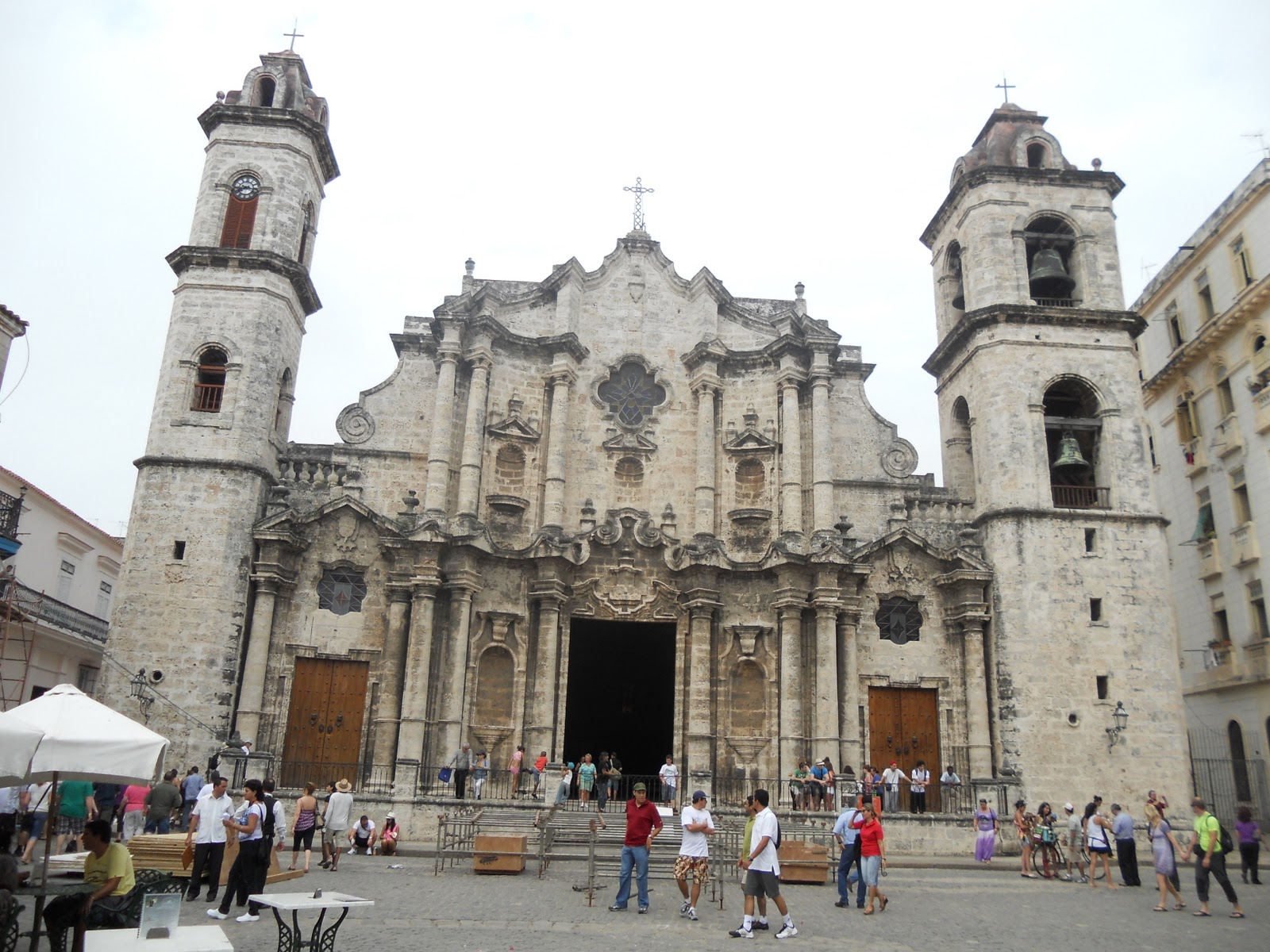
Exploring Cuba


As you know, for an American, even getting to Cuba is kind of a stretch - but it doesn't get a whole lot easier even after you arrive. If you are in Cuba on a license (like I was) you are limited in the things on which you can spend money. You cannot buy anything not related to the purpose of your license.  Still, that is not what makes exploring the islands difficult. No, it is the other financial constraints that get in the way.

Because of the American embargo, US companies are not allowed to do business in Cuba. This means that many financial instruments (credit cards, debit cards, even travelers checks run through US banks) will not work. Even the licensed American traveler needs to have a way to pay for things, not connected to the US system. So how do you do that?

Trinidad
Well, opening a foreign bank account and being issued foreign bankcards is simply not a practical option. That means you need to have cash or foreign bank travelers checks, enough to pay for whatever you will buy. For short and simple trips that might not be such an issue, but for what I had in mind it made me a little nervous. What if you get robbed, or somehow loose your funds?

Of course that could happen anywhere, but in a worst-case, you just have someone wire you some cash. In Cuba, it would have to be from a non-US Bank. I had visions of being stuck alone, in the Cuban countryside with no money and bad Spanish. I decided I had to find a different way to explore the island.

I did something I have never done in my life.  I signed up for a package tour. I had always avoided them because I prefer the freedom that comes from being on your own, but this tour would get me to a bunch of places I just could not figure out how to get to on my own. It was five days in five different aspects of Cuba. It seemed like a good choice.

Hanabanilla
We started out from Havana, where I joined a group that had been together, sightseeing, for a couple days. We headed south across the island to the Caribbean coast and the medium sized provincial capital of Cienfuegos. The routine was pretty constant: drive, lunch, visit, free time, hotel and again the same thing the next day. Our second day took us to Trinidad, an old sugar capital - quaint and well preserved. Day three we visited the nature reserve, Hanabanilla, a beautiful spot - all done up for tourists - a boat ride across the lake from a tourist hotel. Idyllic, but it felt very artificial. Day 4 was el dia del Ché. We visited Santa Clara, home of his mausoleum and scene of his great victory in the battle against Batista. And then finally they deposited us in that most alien of Cuban destinations Varadero. Varadero is to Cuba as Las Vegas is to America. It exists in the country, but if you think that is what the country is like, you're badly mistaken.

Varadero
At the end of the tour, I had seen a lot and learned a lot about Cuba outside Havana. Like all the countries I have visited, there are big differences between the city and the countryside. I also saw a lot of places where I wish I could've stopped the bus, gotten out and done some real exploring. I would've loved to have rented a car and been on my own. Alas. Given the trade-offs, I think my tour was the best I could manage – even if not as much as I wanted.

Friday, February 25, 2011

Exploring Havana


Most of the places we have been we have attempted to walk as much as possible. If you want to get to know a city, that's the way to do it.  Buses can be useful in getting an overview. They cover a lot of ground, and at least you can see the ground you're covering. Subways are pretty useless. You can learn something about general infrastructure and neighborhoods as you watch people come and go but otherwise you have no idea what is going on up there. No, if you really want to get to know a place, you walk.


In Havana, deciding to walk is a pretty easy choice. There is no subway and though there are buses they are not really a viable option, especially for a visitor. First problem is that the fare is in a currency you don't have, the native currency (more on Cuban currency in the Cuba commerce posts). Now you could get some pretty easily - but getting some without breaking the law is a lot harder. The second problem would be getting on the bus. I have never seen buses more crowded in my life. Not even the buses that pick up at sporting events that have just let out, where people cram on rather than wait for the next. Here you would just cram on because the next will be just as crowded. And the crowding creates the third problem; you are a target for pickpockets, it seems.

At least that's what the guidebook tells you. That crushed together environment is perfect for the pickpocket.  Of course they are touching you - how could they not?  No, you are better off walking and so I did. Just once I took a cab late one night when it seemed unreasonable to walk. I thought I was going to asphyxiate.  First, Havana has the worst air quality I have ever experienced (and I lived in LA in the 1960s when LA was worse than it is today)  The cars, trucks and buses all belch smoke like you would not believe. In the cab, in traffic, that smoke is coming right at you. When it's not, the air is no better because inside the cab you are breathing the fumes from the gasoline in the trunk. Yes, apparently the cabs all carry extra gas in their trunks because you can never be sure if the gas station will have it when you need it.  So, when you do find it you get as much as you can. I'm pretty sure the gas in the trunk creates both a health and a safety hazard.

No, you are better off walking. And when you walk you will see the neighborhoods tourists usually blow past in the cabs. The stores that Cubans rely on to meet their daily needs, the houses they live it, the schools they attend and the CDR office that makes sure everything in the neighborhood is just as it should be.  You see the real life.  It's an eye-opener.

Tuesday, February 22, 2011

Turkey: Exploring Ankara

Ankara reminded be a lot of Sacramento, though Brasilia (a place I have never been) may be a better analogy. If you look at the other countries I have visited and ask "why is their capital where it is?" it is not hard to come up with an explanation for Moscow or Berlin.

But Ankara, why is Ankara Turkey's capital? As you have no doubt already deduced from previous posts, for most of the history of Turks in Anatolia, Istanbul was the capital. Istanbul is at the strategic crossroads of two continents and has been at the center of history for thousands of years.

And Ankara? It is kind of in the middle of nowhere - kind of like Sacramento - and sometimes the middle of nowhere is exactly where you want to be. At least that is where Atatürk wanted to be. You have to remember that Turkey (as such) did not exist before Atatürk’s revolution.

The land mass that would become Turkey was part of the Ottoman Empire. With the demise of that empire, large slices of territory were shaved off by European powers for their own purposes. Turkey had no long-recognized borders. Istanbul was on its fringe and potentially vulnerable. Ankara was in the center, geographically sheltered, it was a more secure place to build a government. So that’s where Atatürk built his government.

He also built the city. Like Sacramento, if you took the government away there would not be a lot left. As Turkey is less than 100 years old, so is most of Ankara. There's not a lot of ancient architecture. Ankara is a clean, modern government center. Except for the government it is not at all that exciting.

Wednesday, February 2, 2011

Exploring Istanbul

In some of the cities we have visited, using the word ‘explore’ is something of an exaggeration. Really, what we do is more like wandering around. We grab a map, get an idea of what we'll do, and then go. Along the way, there are interesting sights, but so far it has all been, not that unusual.
Istiklal - my favorite street

Until Istanbul. Istanbul is in many ways very much like the other European cities we have visited and then in other ways it is very different. It was those differences that gave us the feeling of exploring, as we wandered around.

As I said, in many ways Istanbul is like other European cities. It is a European city, after all. Even though Turkey is not (yet) a member of the EU, geographically half the city of Istanbul lies on the European continent. Hence, it is European. And people are very proud of that status. Istanbul's ‘European Honors’ (a museum designated European Museum of the Year; the whole city designated a European Center of Culture) are conspicuously noted.

As we wandered, a recurring thought kept presenting itself. Why isn't Turkey already in the EU? Having spent the last several months in Belgium, the subject of Turkey & the EU came up quite often, I heard that Europeans aren't sure Turkey is ready. Wandering around Istanbul, I wonder who is not ready.

The city is every bit as modern as those European ‘jewels’ we have visited. They have all the things those other places have –Metro, chain stores, even American coffee chains - though believe it or not it is Gloria Jean’s not Starbucks.

But there are differences, which made our time there feel more like exploring. When you turned the corner you did not know which Istanbul you would find - a modern mall or a bazaar, little changed in two centuries. Istanbul has both - a wonderful blend.

Sunday, January 23, 2011

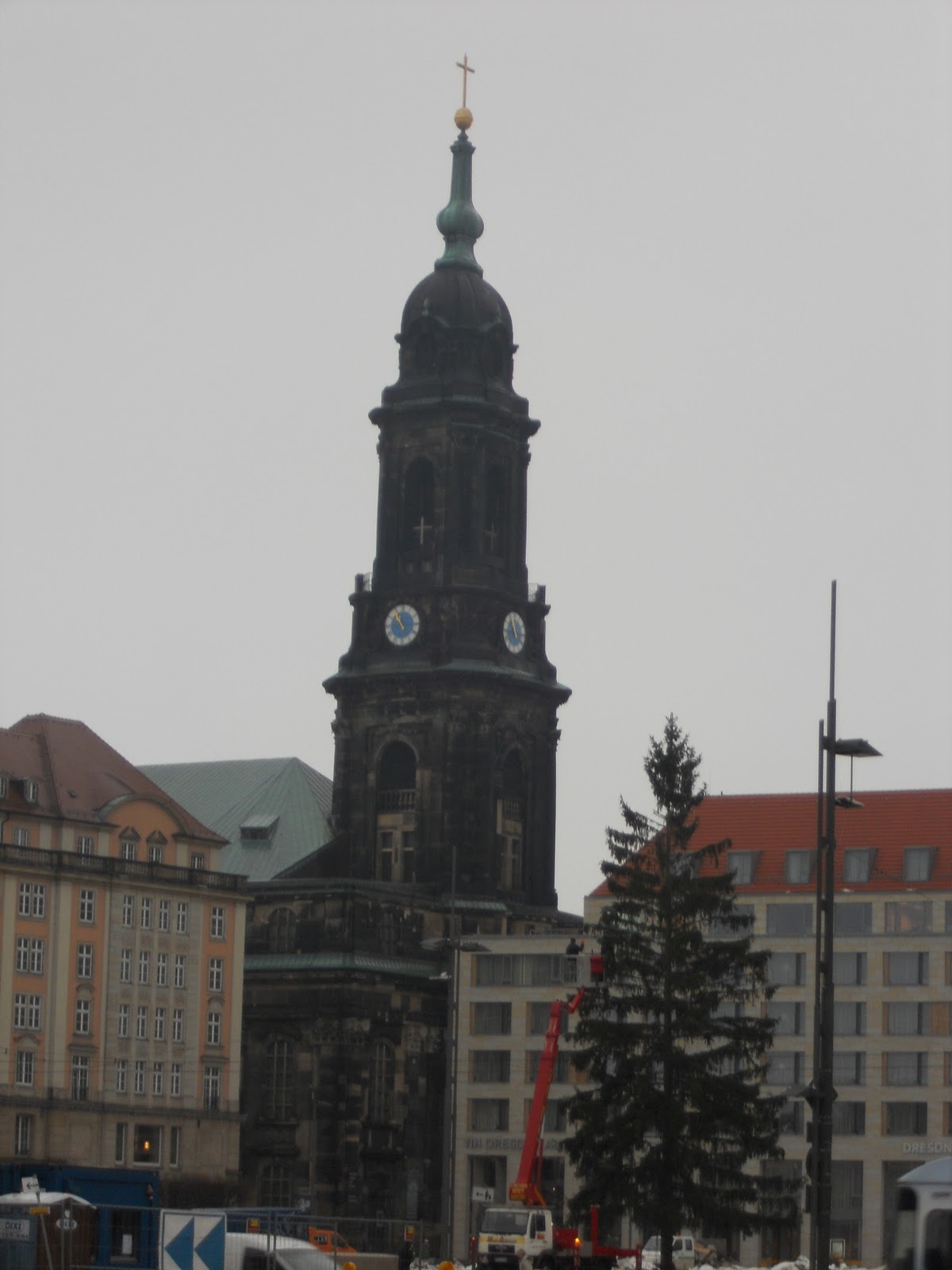
Germany: Explore Dresden

I wonder for what Dresden is better known for - what was built or for what was destroyed?

Make no mistake over the centuries wondrous things were created in the capital of the Saxon kingdom. The surrounding territory was rich in gems and mineral deposits and this wealth became the foundation for a very prosperous city where sculpture and porcelain arts flourished. It also made the Kings very wealthy and as wealthy kings often do, they built palaces and cathedrals. Dresden was a wonderful place.

Until that night in February 1945 when, for whatever reason, bombs rained down on the city.  The bombing has long been controversial.  Was it revenge or a legitimate military target? To Dresdeners it did not really matter. The allies sent their bombers and nearly erased the city from this earth. Dresden, of course, was not unique in that respect. The pictures of Coventry or Cologne after the war show a scene not all that different to what you would have seen in Dresden. The war over, in Cologne they began the building.

What makes Dresden interesting is that after the war, that same rebuilding was not undertaken.  In part, it was a simple lack of resources. East Germany did not get Marshall Plan aid. Part of it was ideological, "should a Workers State rebuild palaces and churches?" The answer was no. I always thought that perspective was short sighted. There's money in tourism - but then tourism is a pretty bourgeois activity.

Nonetheless, as of 1979 when I first visited Dresden, little of the prewar grandeur had been restored. Some of the ruins, in particular the Frauenkirche (see next post) had been intentionally preserved as a ruined pile of rubble - the fruits of fascism. They had just begun to work on the Zwinger Palace, though this was already 35 years after the end of the war.

Now 20 years later and with a change in the political regime, what would Dresden be like?

Well as you can see from the pictures, Dresden's architectural treasures have been reclaimed. Today the city is an interesting blend of three eras; the Royal; the communist; and the capitalist. The city bears all the marks of its somewhat rocky road to the present.

Saturday, January 22, 2011

Germany: Exploring the Capital

Me & the Bahns
What is Berlin like? Well, first off it is a massive city. Like any other European city of import, that means it will have a thorough and reliable system of mass transit. Berlin does not disappoint on that question. The system here is so extensive that printed maps are of little use to my 50 year old eyes. In order to squeeze its totality onto an 8 1/2 x 11 page they have to resort to what looks like a four point typeface to list what must be more than 200 stations, strung upon two dozen separate lines. (I did not stop to count). You can cover a lot of ground and you can do it relatively economically at about eight dollars for an unlimited day pass without any discount or monthly purchase.


But then Berlin needs a massive infrastructure because it is, of course, two cities merged only recently. East Berlin was a European capital in its own right and needed all of the accoutrements of that status. Museums, operas, theaters and the like, in addition to the government buildings. West Berlin was not just a capital in waiting but a show piece. It
Pergamon Museum Ishtar Gate
had to out shine it's twin. Then, the wall separating the two came down and the reason for the duplication disappeared. But all of those resources did not. Berlin is an extraordinarily cultured city.

It has more than 60 museums and even though that list includes the “German Curry Wurst” museum (did not visit) it also includes the sum of the cultural heritage of two great cities and competing political regimes.

Today, without knowing, you would be hard pressed to tell where capitalist Berlin left off and socialist Berlin began. The fall of the wall created extraordinary opportunities for urban redevelopment and corporations (like Sony at Potsdamer Platz) have stepped in and entirely remade the landscape. Today there is just one Berlin – modern, vibrant and efficient.

Tuesday, September 21, 2010

Russia; Explore Moscow

I am afraid I'm with Peter the Great on this one. The story is that Peter created St. Petersburg because he could not stand Moscow. I think I agree with him. When you compare Moscow and St. Petersburg, Moscow really comes up short.

Moscow is not at all beautiful, in any respect.  That is not to say that there are not beautiful things in Moscow.  There are.  Lots of them.  The problem is that these bits are overwhelmed by the rest of the city.

Moscow is massive.  Its Metro has nine different lines.  The exact population is not known for certain, Muscovites tell me.  More than ten million have permission to live here but there are millions more who live here without official permission.  Yes, you need official permission to live in Moscow.  This is Russia.

On the metro you encounter that immense crush of humanity. With all those lines, of course, from time to time you must transfer. At rush hour, the train doors open and out streams a flood of people. The mass flows, shoulder to shoulder along the corridors to the next train. Heaven forbid you should want to pause (maybe to check directions or read signs in a strange alphabet?)  There is no place to stand. You just get swept along.

Our Moscow Homestay

Above ground Moscow is littered with large Soviet era buildings, separated by very wide streets. Ten lanes across is not unusual. Crossing them would be impossible so they send you under. At most intersections there are "subways" and along those passages are a variety of small cubicle shops selling almost anything you can imagine: kitchen ware, clothing, phones, watches, medications, you name it. And they are not just there 'on offer', at commute times the stands are busy. A time saver for harried people in a rush.

Smaller, slower, less Soviet, St. Petersburg is more my style.

Russia; Exploring St. Petersburg

Impressions of St. Petersburg.

It starts of course, at the airport, even before the seat belt sign is turned off, as the plane taxis down the runway past the rusted hulk of an earth mover pushed just far enough to be out of the way and left to rot. Then past the carcasses of the decommissioned aircraft, neatly parked and seemingly waiting for something - but it's not clear what. Would they ever be brought back to service? Who in their right mind would board a flight on a plane that looks like it has not been used in 10 years? If they are junk, why not move them? It's a lot like now disappearing Carquinez moth ball fleet. And it sets a tone.

It is a tone that recurs somewhat frequently throughout St. Petersburg. There are many relics of a previous time that look like they don't quite work and don't quite belong in a modern Russia. Parked next to brand new BMWs you'll see a 30 -year-old Lada that looks like it will collapse into parts at a stiff breeze. Walking around St. Petersburg you are impressed with the spectacular at nearly every turn. The architecture is mostly classical European, the buildings are generally well maintained as are the roads. Notably, the sidewalks are not. Uneven footing everywhere, asphalt covering coarse granite, pot holes everywhere. The streets are crowded, but seems most of the foreign tourists are gone. The groups in the church today all seemed to be conducted in Russian.

St. Petersburg is not hard to get around it. We have found English speakers to help us everywhere we have ordered food (okay maybe that's not a stretch at Mickey D's) but the other place was a real restaurant.  We are starting to recognize words and letters, but reading is not speaking. That is still tough.  Breathing is tough, too. Everybody smokes. Walking down the street we move from cloud to cloud. Some of the clouds are auto exhaust. Clearly they have not adopted California emission standards. The smell of exhaust is pretty constant.

Negatives do not overwhelm stunning views however. St Petersburg is a beautiful city. Water almost always improve the beauty of the city. San Francisco certainly benefits from a watery separation from Oakland. That watery space creates vistas for appreciating the structures beyond.

If you can believe the guidebook, St. Petersburg has more bridges than any other city. It makes sense. St. Petersburg was built on a swamp, drained to become a series of islands. Its existence is a testimony to the will and power of a single man - albeit a man who was Czar. Peter the Great hated  Moscow and so he decided there would be a new capital. And he decided it would be here, the swamp and the difficulties be damned.  At one time he decreed - Czars can do that, just make it so - that no building of stone could be built anywhere in Russia, save in St. Petersburg.   In St. Petersburg they could build, and so they did. The architecture is beautiful. It reminds one of Renaissance France and in some cases Holland. Fitting, considering the great influence those countries had on the 18th century Russian court.

Odds and ends: Young women in St. Petersburg have a penchant for wearing the most impossible shoes. Five-inch stiletto heels are not at all uncommon, and they wear them in the most unlikely places. In the Hermitage we walked almost 8 miles viewing the exhibits and at the end of the day my feet were killing me. Yet we saw plenty of women in five-inch heels. Why? They must be tough, and given the conditions the streets, blessed with great balance.